Saturday, February 20, 2016

Fasching

The week before the beginning of Lent (which is the catholic practice of fasting from something - often meat, sweets, fats, rich foods - for 40 days before Easter) is marked by celebrations worldwide.  Carnival in Brasil, Mardi Gras (Fat Tuesday) in New Orleans.  In Germany it is called Fasching.
People dress in costumes like at Halloween.  
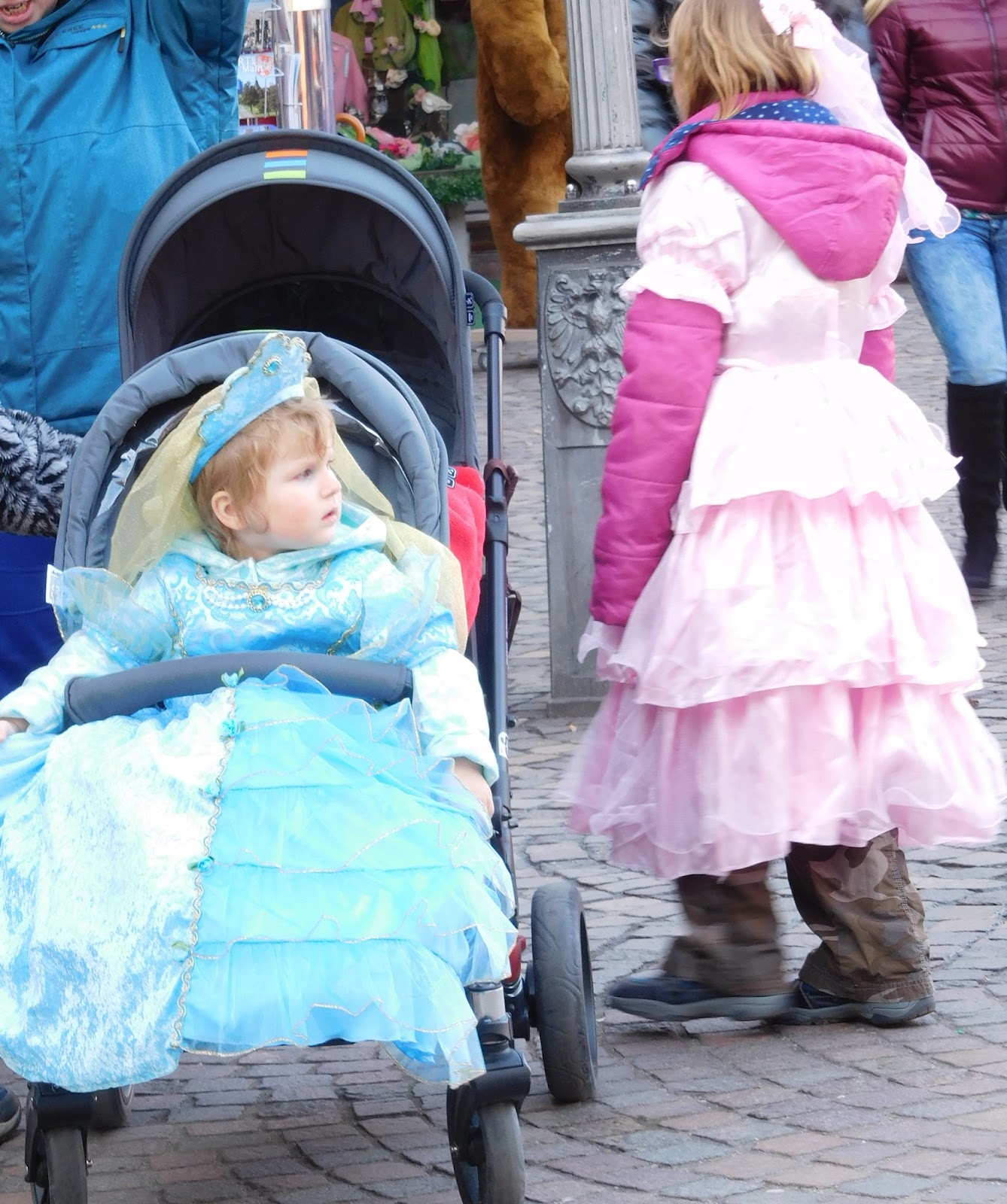
They join clubs: young children to grown adults doing close order drills in silly uniforms.  
They form  marching bands to give adults a chance to dress up in expensive and bizarre costumes/uniforms, march in a parade and play music with friends.  They don't have high school marching bands in Germany, so this is their equivalent.
People go in costume to dinners with hundreds of friends in very crowded halls where the entertainment is comics in absurd hats reciting satirical poetry with a special cadence and with group chanting, clapping and drum rolls.  Seriously.  They do that for HOURS.
We happened to be downtown in Frankfurt on Saturday at the time the Children's parade 
was winding it's way down the Zeil (the main shopping district).  
"In parts of East and South Germany, as well as in Austria, carnival is called Fasching. In Franconia and Baden-Württemberg as well as some other parts of Germany, the carnival is called Fas(t)nacht or Fasnet; in Switzerland, Fasnacht.
"Germany's carnival traditions are mostly celebrated in the predominantly Roman Catholic southern and western parts of the country. It is traditionally connected with farm servants or generally young men going from house to house in the villages and collecting sausages, eggs and bacon, which was consumed in a festivity on the same evening. While going from house to house they wore masks and made noise. The old tradition vanished in many places, in other places under influence of German carnival traditions it came to resemble carnival with its parades.Although the festivities and parties start as early as the beginning of January, the actual carnival week starts on the Fat Thursday (Weiberfastnacht) before Ash Wednesday (in Germany). The big German carnival parades are held on the weekend before and especially on Rosenmontag, the day before Shrove Tuesday, and sometimes also on Shrove Tuesday (Faschingsdienstag or Veilchendienstag) itself in the suburbs of larger carnival cities."

After watching the parade, we walked over to the Dom, the big cathedral in town.  It is under repairs on the east end, but the tower is still cool.


The new history museum that they are building on top of the ruins of the Roman village is really huge.  The ruins will be on the bottom floor.


I love the juxtaposition of the old churches and the new financial district.


And I love the colors of paint on the homes.

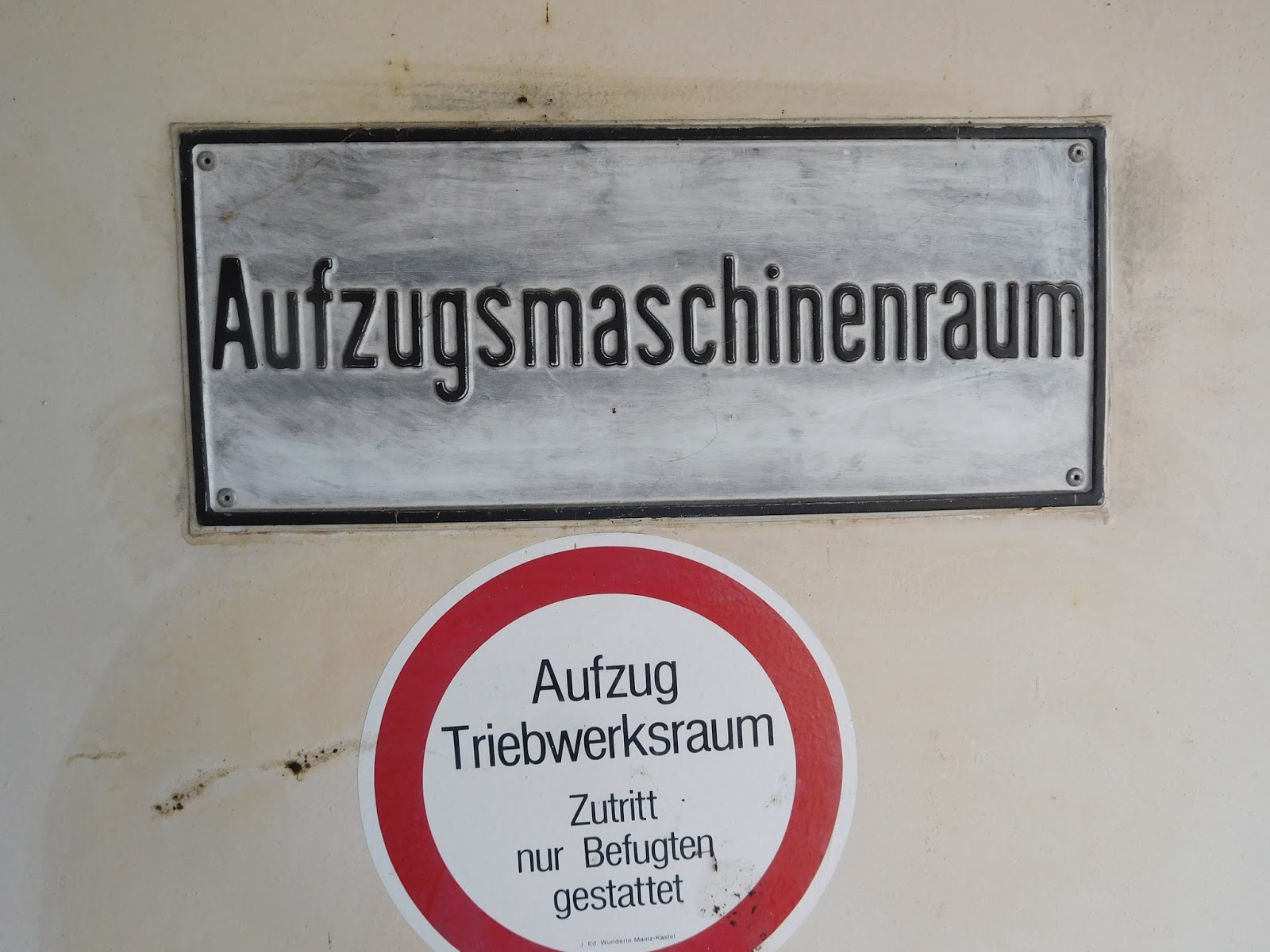
This is what I love about German: how they construct words: This one is an "Up -Down-Machine-Room" : where the motors are to run the elevator.


Wednesday, February 17, 2016

Second Visit to Limburg

Monday some of the other senior missionary sisters drove to the refugee recreation center and volunteered their time.  They LOVED it.  This was Sister Hacking's report: 

Dear Sisters,
First, let me say “Thank you” for your generous donations for Refugee aid.  Wow!  I was overcome with gratitude for your willingness to contribute for items to help the people of Limburg.  I bought tons of yarn, C-hooks, K-needles, scissors, elastic, etc.  Thank you so very much.  We went well prepared!
What a marvelous experience we had yesterday at the Limburg Refugee Camp Rec Hall.  I drove and Sister’s Johnson, Matheson, and Edmunds accompanied me.  We did not know exactly what awaited us, but we just decided to see what we could do and learn and go from there.
We learned so much.  And we learned that it is a great place with much opportunity for meaningful service.  We left at nine am, started immediately after arrival with projects that we took with us, ended at noon, then drove home.  It takes just under an hour to get there.  We had an enjoyable drive, visiting all the way there and back.  On our return trip, we had a great discussion on what activities and projects we felt would be the best for the men, women, and children there.  We came up with some ideas that we think will be fun, educational, physical, and meaningful for the men, women, and children that we served yesterday.  We realize that the size for the groups, their needs, likes, etc., will be different from week to week.  We realize, also, that we need to plan and prepare carefully, so that when we arrive we are “ready to go”.  The children swarmed around us and we immediately went to work with what we brought with us.  I started by handing out crochet hooks and yarn, then teaching crocheting fingerless gloves (about the only thing I know how to make).  Sis. Johnson brought Cheerios and yarn for the children to make necklaces.  That was a BIG hit.  There were a lot of children, more than we expected, so Sister’s Matheson and Edmunds were kept extremely busy the entire time entertaining, organizing activities, and keeping them entertained.  When we returned home, Sister’s Matheson and Edmunds, and I went to the Tedi store and the Euro Store for more yarn and supplies.  We came away with some wonderful, inexpensive things to take the next few times we go.  Here are a few of the things we purchased:  small children’s puzzles, bubbles, jump ropes, play dough (just a little because we can make Salt Dough), Sand Dough, little packages of colorful rubber bands to make braclets, cotton yarn to make wash clothes and Friendship Bracelets (the women really wanted a wash cloth), small, but nice, backpacks (again, the women really would like a backpack), colored pencils (we couldn’t find crayons), and a few coloring books that we can separate and hand out.  We are going to make small Bean Bags for toss games.  Sister Edmunds will help the children make paper chains, that they will color and add stickers.  We have so many ideas!  If you have any ideas, or would like to sew Bean Bags, or backpacks, let us know.  Sister Matheson will come up with a pattern.  We realize that we need group, fun, and inexpensive activities.  And, we need to plan ahead and plan well.  So many of our friends and family members back home have asked, “What can we do?”,  that we are also going to send the message home to them, that if anyone would like to send money, (like a cashier’s check through the POUCH), we would love to have their donations.  That would be a separate donation from their Humanitarian donation on their tithing slip.  We would buy more supplies to use when we go to the Rec Hall—things like I’ve mentioned above. 
So, who else would like to go and when is a good day for you?  Let’s communicate through this group email.  I can’t go on Tuesday, but I will go on Thursday’s and Monday’s.  We have several that are willing to drive.  Please be in touch. 

Here is another opportunity that will present itself in the near future:  From Sister Stay:  Here is an opportunity to serve: Katrin at Caritas up in Oberursel (where you sorted and gave out clothes) will need women willing to go into apartments of newly arrived refugees and show them how to use the appliances.  Lots of pantomime involved!  See if anyone else thinks that would be fun.  End of February is when they arrive. This is being coordinated by the Friedrichdorf Stake Relief Society President.  She has a lot of women in her stake who also want to serve.


Saturday, February 13, 2016

Seligenstadt am Main

This is the town we visited to see the Easter Market.  The alte stadt (old town), Kloster (cloister) and gardens were as fascinating as the eggs were beautiful.

Normally, the kloster is now a museum.  It has ancient artifacts, paintings and all kinds of historical stuff that Randy and I find interesting.

Roman coins found in Seligenstadt : it was one fort on the Roman Limes road, the fortified northern most 'limit' of the Roman empire in the 1st century AD

Paintings of the town and countryside


 The beautiful plasterwork ceiling in one of the rooms.
 The windows in the room looked like the decorated eggs!
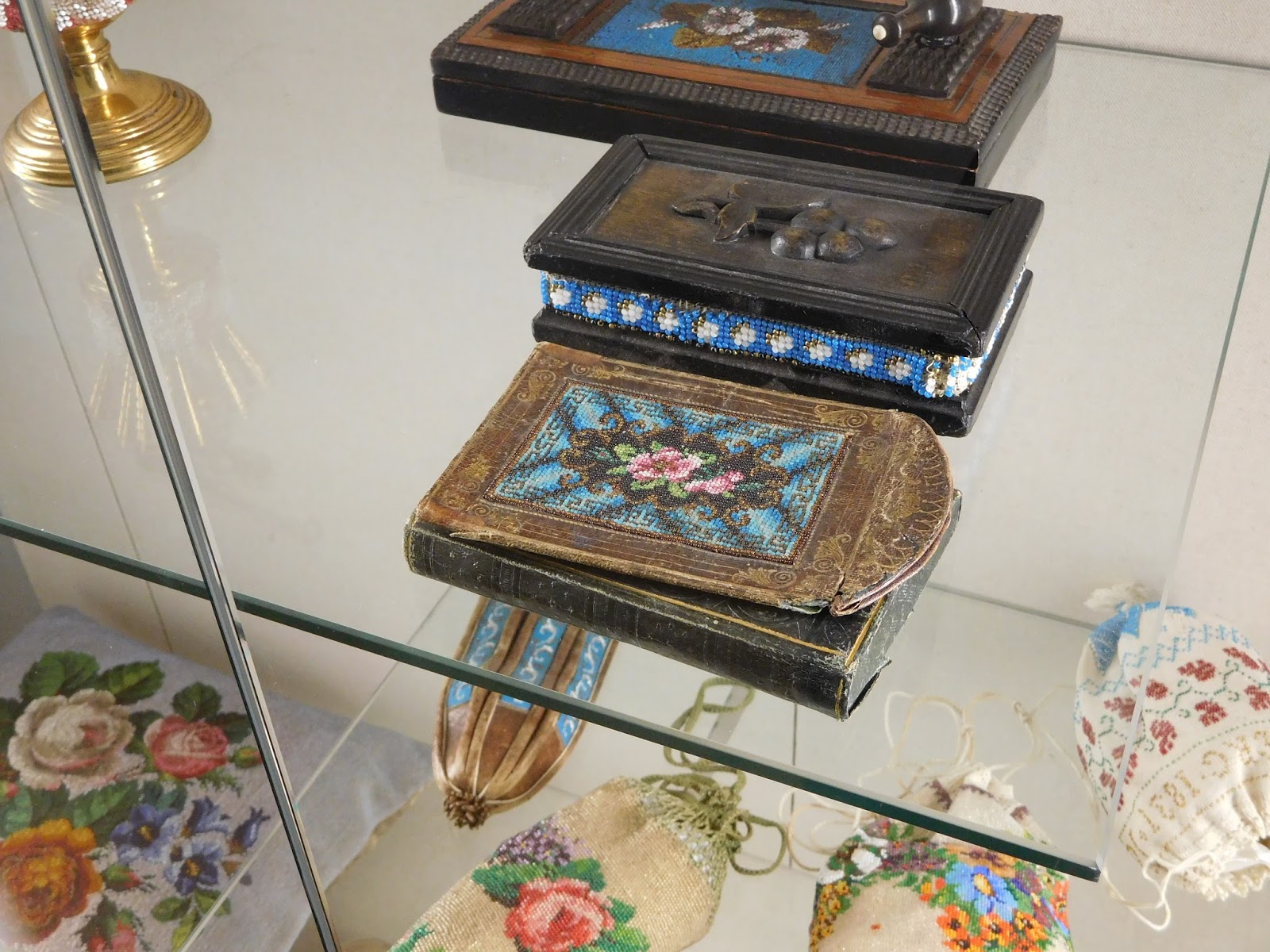
 Seligenstadt is famous for it's embroidery, lace, beadwork and textiles.


 Immigration into Germany is nothing new: in 1947 people from all over Europe were moving into Germany.  Randy suggested putting a really BIG red arrow with "Syrien" on it on this map.


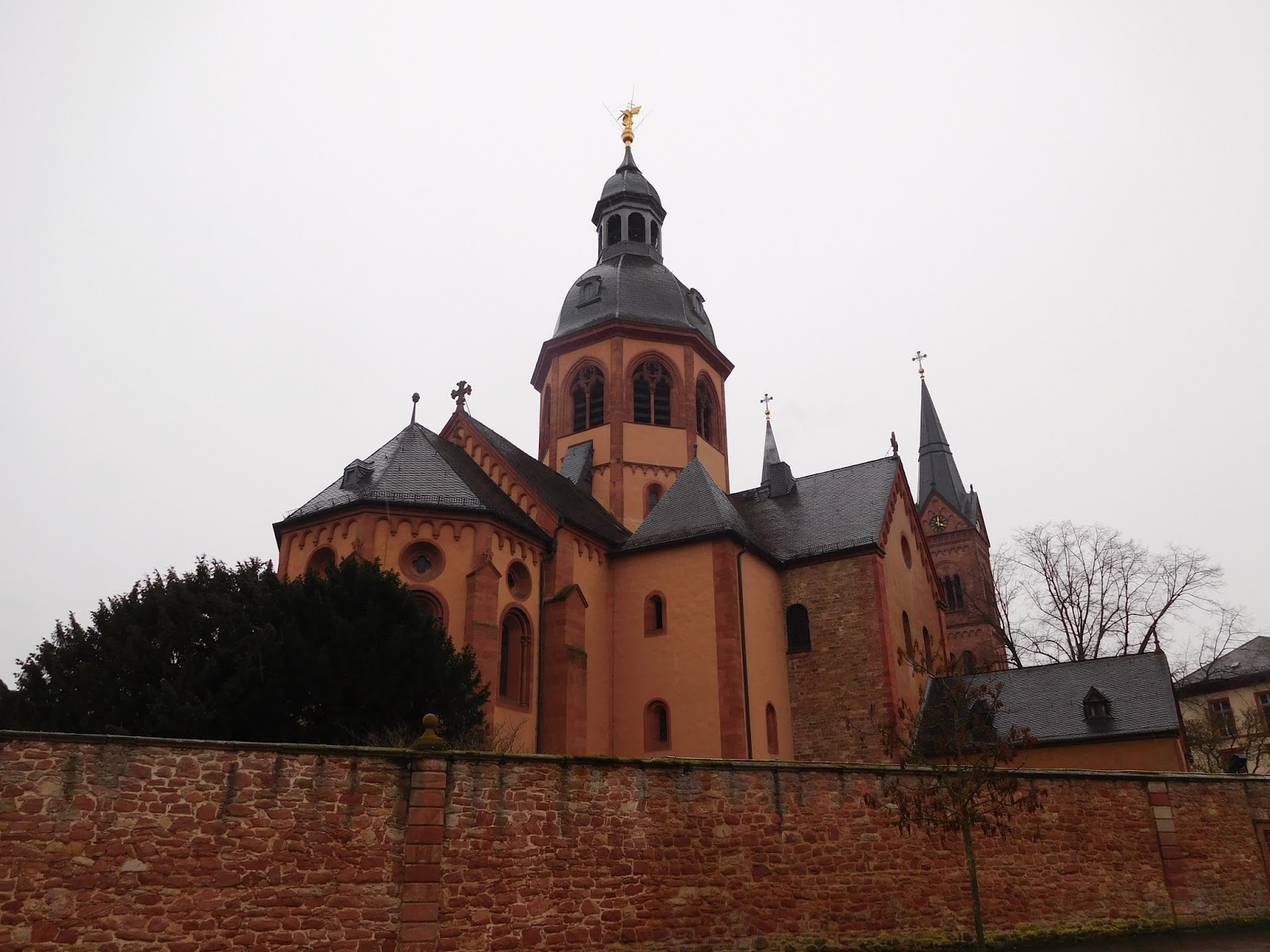
Pilgrims, both Cistercians from the north, and Benedictines who built the basilica, passed through Seligenstadt


This is for Maggie.

The whole old town is full of half-timbered buldings


The body parts on the back right were offerings given by the faithful in thanks for healings 


I liked this baby Jesus in a beaded box.

Beautiful quilling inside a carved box


One inch high silver musicians


Michael victorious over the dragon.


This portrait reminded me of a self-portrait Doug did of himself back in school

More herbs than I have ever seen in one garden

Each tree is a different variety

These are OLD fruit trees, cut back each year so they are, at most, 3-4 feet tall.


The entire surrounding wall is lined with Espaliers, trees trained to be two-dimensional, taking less space and benefiting from the warmth of the walls.


Looking out into the cemetary

Mandel: Almond


The car ferry crossing the Main river


Old wood cut of the basilica and the gardens, which haven't changed


Weihnachten (Christmas) decorations still up


Senior office missionaries from the Frankfurt Germany mission

Stolperstein or "Stumble stones" mark the location of homes of Jews and others forcibly removed and often killed by the Nazi regime.
Guenther Demnig is the artist and sculptor behind the stumbling stones. Here, he installs new bricks in Berlin. He says formal memorials are too abstract. Not so with the stumbling stones. "Suddenly they are there, right outside your front door, at your feet, in front of you," he says.

Guenther Demnig is the artist and sculptor behind the stumbling stones. Here, he installs new bricks in Berlin. He says formal memorials are too abstract. Not so with the stumbling stones. "Suddenly they are there, right outside your front door, at your feet, in front of you," he says.

 Read and hear more at http://www.npr.org/2012/05/31/153943491/stumbling-upon-miniature-memorials-to-nazi-victims
I love that a 600 year old home is now a "Trend Store."

I like that they left Mary there on the wall


Here they replaced the waddle and daub between the timbers with glass: I like the blending of old and new.


Easter is a BIG DEAL in Germany

We split a doner for an early dinner.  Very fresh and delicious.

Turkish immigrants in Berlin developed a version to suit German tastes; this regional variation has become one of Germany's most popular fast food dishes. Annual sales in Germany amount to €2.5 billion.[38] Veal, chicken, and becoming increasingly more popular, turkey ("Truthahn"), are widely used instead of lamb, particularly by vendors with large ethnic German customer bases, for whom lamb is traditionally less preferred.
Döner, common German style (Berlin)
Döner kebab in a dürüm
Typically, along with the meat, a salad consisting of chopped lettuce, cabbage, onions, cucumber, and tomatoes is offered, as well as a choice of sauces like hot sauce, herb sauce, garlic sauce, or yogurt sauce. The filling is served in a thick flatbread that is usually toasted or warmed. A German variety of döner presentation is achieved by placing the döner meat and the add-ons on alahmacun and then rolling the ingredients inside the dough into a tube that is eaten out of a wrapping of usually aluminum foil, sometimes called "Turkish Pizza". When plain dough is used instead of Lahmacun the rolled fast food is called "Dürüm Döner" or "Yufka Döner."
Tarkan Taşyumruk, president of the Association of Turkish Döner Producers in Europe (ATDID), provided information in 2010 that, every day, more than 400 tonnes of döner kebab meat is produced in Germany by around 350 firms. 
This is the name of the owner of the Doneria in calligraphy.